Proctorio Annual Report
Impact Report
Table of Contents
Tracking, reducing, and offsetting
Proctorio's path to carbon negativity
At Proctorio, sustainability has been a long-term commitment, not a recent initiative. We set out to become carbon-neutral within five years and achieved that goal in 2018. Since then, our focus has shifted toward continuous improvement and long-term impact. Our goal is to become carbon negative by the end of 2026. That means not only reducing emissions across our operations, but also removing more carbon from the atmosphere than we produce.
Why it matters to
partner with Proctorio
When organizations choose Proctorio, they support a company working to lower its environmental footprint. This can strengthen their own efforts to reduce impact and meet sustainability goals.
Working with Proctorio shows a clear commitment to responsible practices. It can build trust with students, employees, and communities. As more people look for environmentally responsible partners, this shared focus can make a difference.
Quick question
What does Proctorio support to be carbon negative?
You got it! We do them all!
Actually... We do them all!
Emissions by the year
Emissions by category
| Category | 2022 (kg CO2) | 2023 (kg CO2) | 2024 (kg CO2) |
|---|---|---|---|
| Business travel | 107,912 | 63,473 | 45,118 |
| Employee commuting | 162,888 | 86,066 | 70,383 |
| Direct + office | 9,333 | 7,232 | ~6,000* |
| Other (energy, goods, upstream) | 344,466 | 352,132 | 106,757 |
| Total | 624,599 | 508,903 | 228,258 |
*2024 Direct + office figure is an estimate based on available data.
2024 consolidated carbon footprint
In 2024, we moved to a more granular, location-based measurement approach, capturing emissions across three primary offices.

Scottsdale
151,515
kg CO2
Belgrade
75,579
kg CO2
Frankfurt
1,164
kg CO2
Emissions by scope (GHG Protocol)
We categorize emissions using the Greenhouse Gas Protocol, which groups emissions based on how directly they are controlled.
Scope 1 (direct)
<1%
On-site equipment
Scope 2 (energy)
~26-33%
Purchased electricity
Scope 3 (indirect)
~65-75%
Commuting, travel, vendors
Offset and
reforestation work
Proctorio also removes emissions through tree planting, partnering with Evertreen to support reforestation and provide local jobs.


Estimated carbon offset
601.5
tonnes of CO2

Local work supported
133.6
working hours

Trees planted
1,069
in Kenya and Madagascar
Proctorio's sustainability initiatives
We've made targeted improvements across our operations to reduce energy use and resource consumption at every location. These changes directly contributed to lower emissions, particularly in energy use and day-to-day operations.
Energy and
resource use

Solar panels powering office operations and AI systems
Automated HVAC and lighting systems
Water-saving infrastructure and real-time monitoring
Expanded recycling, composting, and paperless systems

Commuting
options
Public transit subsidies
Electric vehicle charging at all U.S. offices
Bike-to-work program

Local projects
and volunteering
Sponsorship of six highway cleanup zones
Support for employee-led environmental activities
Environmental projects beyond the office
In addition to reducing our own emissions, we invest in environmental initiatives that contribute to broader climate impact. These efforts help address emissions beyond our direct footprint while supporting environmental and community outcomes globally.
Matebe Hydroelectric Plant
Proctorio tracks its carbon footprint and supports projects that help offset emissions. One example is the Matebe Hydroelectric Plant in Virunga, Congo. This area is home to endangered mountain gorillas and Africa's oldest national park. The plant reduces nearly 50,000 tonnes of CO2 each year.
Ocean protection
through plastic collection
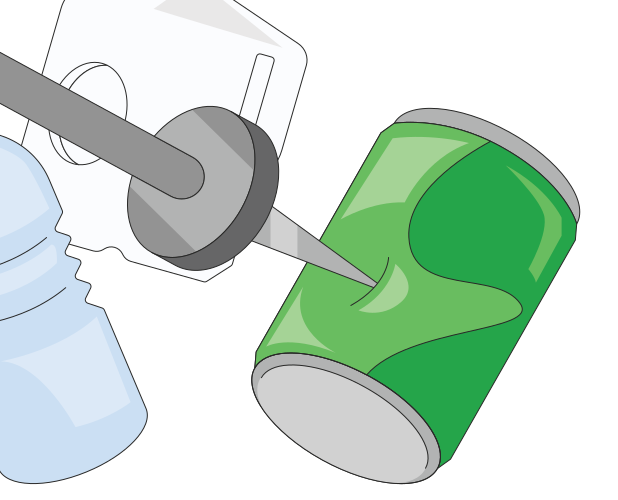
For every tonne of CO2 Proctorio offsets, 10 kilograms of plastic are removed from coastal areas. This helps prevent pollution from reaching the ocean and supports healthier marine ecosystems.
Tracking what matters
In 2024, we significantly improved how we track emissions. We transitioned from high-level reporting to location-specific carbon accounting, aligned reporting with GHG Protocol standards, and implemented real-time tracking for energy, water, and emissions. We identified key emission hotspots, including commuting, electricity, and travel, to guide future reductions. This shift enables more precise decision-making and ensures we can continue to reduce emissions in a targeted and measurable way.