Executive Summary
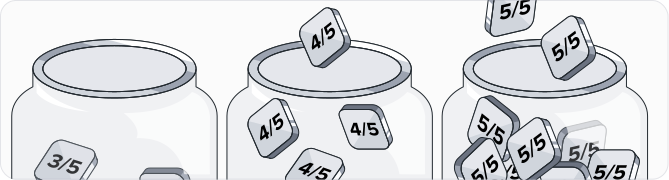
In early 2026, Dr. Trevor Basil noticed something unusual in his online classes at two California colleges. Unproctored quizzes were producing almost all near-perfect scores. The results were tightly clustered at the top, a clear ceiling effect, making it difficult to tell who truly understood the material and who did not.
When remote proctoring was introduced, that pattern changed. Scores spread out across the grading scale and began to look more like those from a typical in-person, supervised classroom. The change continued in later quizzes, and online proctored classes closely matched in-person results.
Grades did not suddenly drop. Strong students still performed well. What changed was that the exams could once again distinguish different levels of performance. The study suggests that remote proctoring can help restore the basic purpose of an assessment: accurately measuring what students know.