

Building for neurodiversity starts inside the company
Read blog Solution overview
See solutions side by side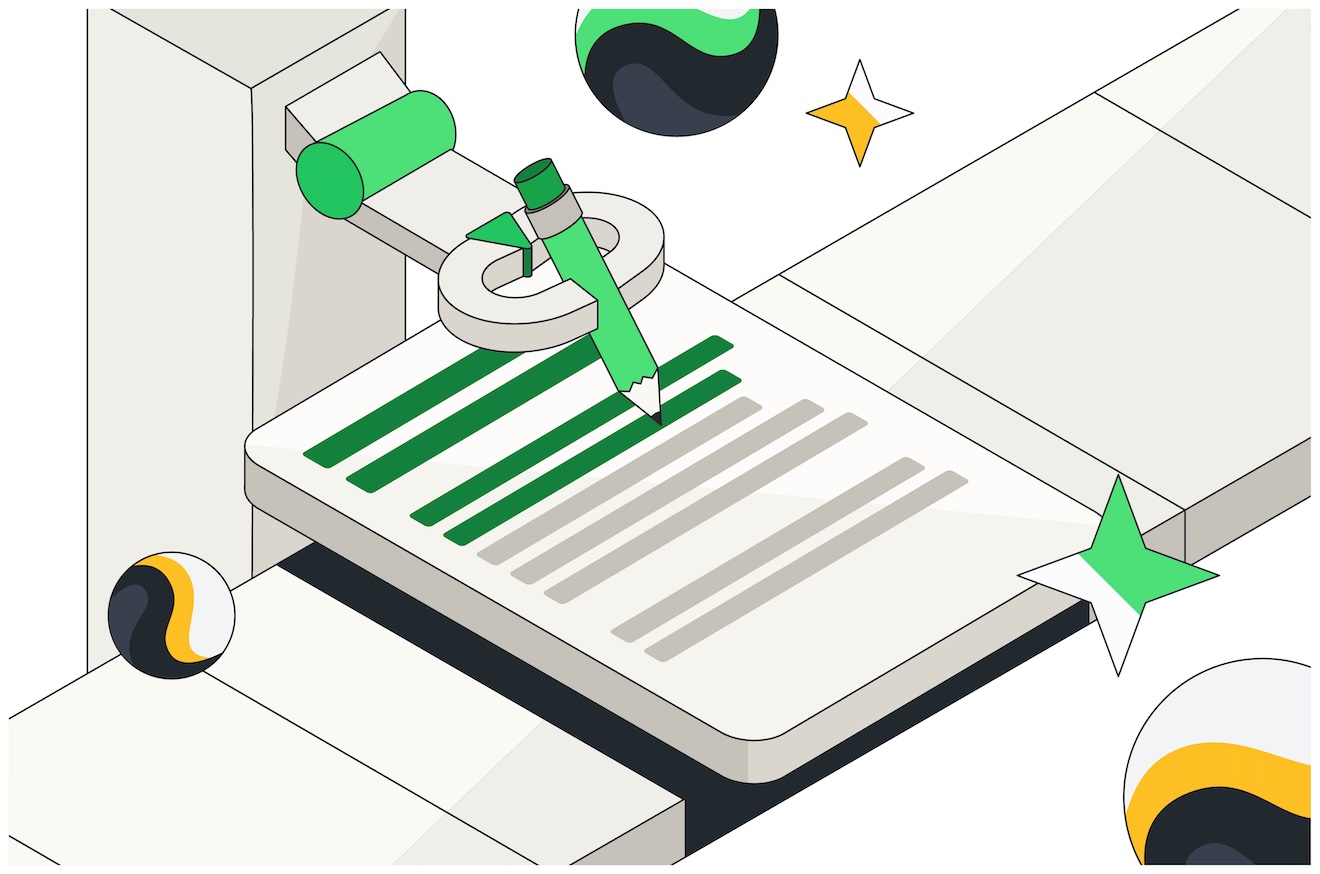
How AI is evolving from generating content to simulating human work, and what that means for educators.
Artificial intelligence has already transformed academic integrity. It has made it easier to generate assignments, complete assessments, and automate tasks that once required significant effort. As AI continues to advance, these challenges are becoming more complex.
Early generative AI tools focused on producing content. Students could use them to write essays, answer questions, and summarize readings. Much of the discussion centered on detection: Can we identify AI-generated work?
That question is now shifting.
A new category of tools goes beyond generating finished content. Instead, these tools simulate the process of creating work over time, making it appear as though a human produced it naturally.
As reported by The New York Times, tools like Duey and Dripwriter represent a growing category known as AI process simulation. These tools gradually type AI-generated essays into platforms like Google Docs, creating realistic version histories that resemble authentic student work.
For educators, the key question is evolving from Was this written by AI? to Does this reflect genuine human effort?
What Exactly Is AI Process Simulation?
AI process simulation refers to software designed to imitate how people create work.
Rather than producing a finished document instantly, these tools replicate behaviors such as:
The goal is not just to create believable content, but to create believable evidence of how that content was produced.
From Content Generation to Process Simulation
Earlier AI tools focused on outputs.
Newer tools focus on the process behind those outputs.
| Traditional AI Writing | AI Process Simulation |
|---|---|
| Generates finished content | Simulates the writing process |
| Focuses on final output | Focuses on creation behavior |
| Instant results | Gradual development |
| Minimal edit history | Realistic revisions |
| Mimics writing | Mimics human behavior |
The question is no longer just Can AI write this? but Can AI make it look like a human wrote this?
Real World Examples
Tools like Duey and Dripwriter demonstrate this shift.
Instead of simply generating essays, they simulate writing activity inside Google Docs. Users can control how long the writing process appears to take, from minutes to days.
During this time, the software introduces pauses, edits, and revisions to mimic natural writing behavior.
These tools emerged partly in response to instructors reviewing version history to detect pasted content. Rather than bypassing detection alone, they aim to create believable writing histories.
Can students fake Google Docs version history?
Yes.
AI tools can gradually input text, creating realistic version histories. While version history shows how a document evolved, it does not confirm authorship.
Does version history prove authorship?
No.
It provides context but is not definitive proof. Various workflows—including AI tools, collaboration, and dictation—can produce similar histories.
Can AI simulate human writing behavior?
Yes, and this capability is expanding.
Current tools simulate typing, pauses, and revisions. Future systems may simulate:
As these capabilities grow, relying on a single indicator becomes less effective.
Why Layered Cheating Tools Matter and What This Means for Institutions
These tools are often used together.
A student might combine content generation, rewriting, and process simulation tools to create more convincing outputs.
This layered approach increases effectiveness and makes detection more difficult.
The key point is that single-method detection is becoming less reliable.
Institutions should be adopting layered strategies that include:
Evaluating multiple signals provides a stronger approach to maintaining integrity.
How Proctorio Approaches Authenticity
Proctorio uses a layered approach to evaluate authenticity.
For AI Process Simulators, Proctorio addresses this shift by looking beyond the visible writing process to the underlying behavior that produces it. While AI process simulation tools can recreate the appearance of human activity (e.g. typing patterns, pauses, and revisions) Proctorio’s Behavior Tracker analyzes the deeper input signals behind those actions.
This includes how interactions occur at the keyboard and browser level, helping distinguish whether the activity reflects genuine human effort or automated generation. In other words, rather than relying solely on how the work appears to have been created, Proctorio evaluates whether the behavior itself aligns with authentic human input.
But this is one of many layers Proctorio offers.
Key Takeaways
The challenge is no longer just identifying AI-generated content, but understanding whether work reflects authentic human effort.